About Intinauta
Contents
- Who We Are
- Origin and Meaning of the Name
- Institutional Mission and Vision
- How Intinauta Is Organized
- Laboratories and Initiatives
- Academic and International Projection
- Intinauta and LAJA
- Institutional Contact
Who We Are
Intinauta Research Center is a Peruvian research center focused on the development of science, technology, and training in the space domain. Its institutional model connects academic research, applied innovation, and scientific capacity-building for a new generation of researchers, students, and university teams interested in space exploration and aerospace technologies.
Intinauta promotes a contemporary vision of space research from Latin America, integrating scientific ambition, educational commitment, and international academic projection from an institutional base of its own.
Origin and Meaning of the Name
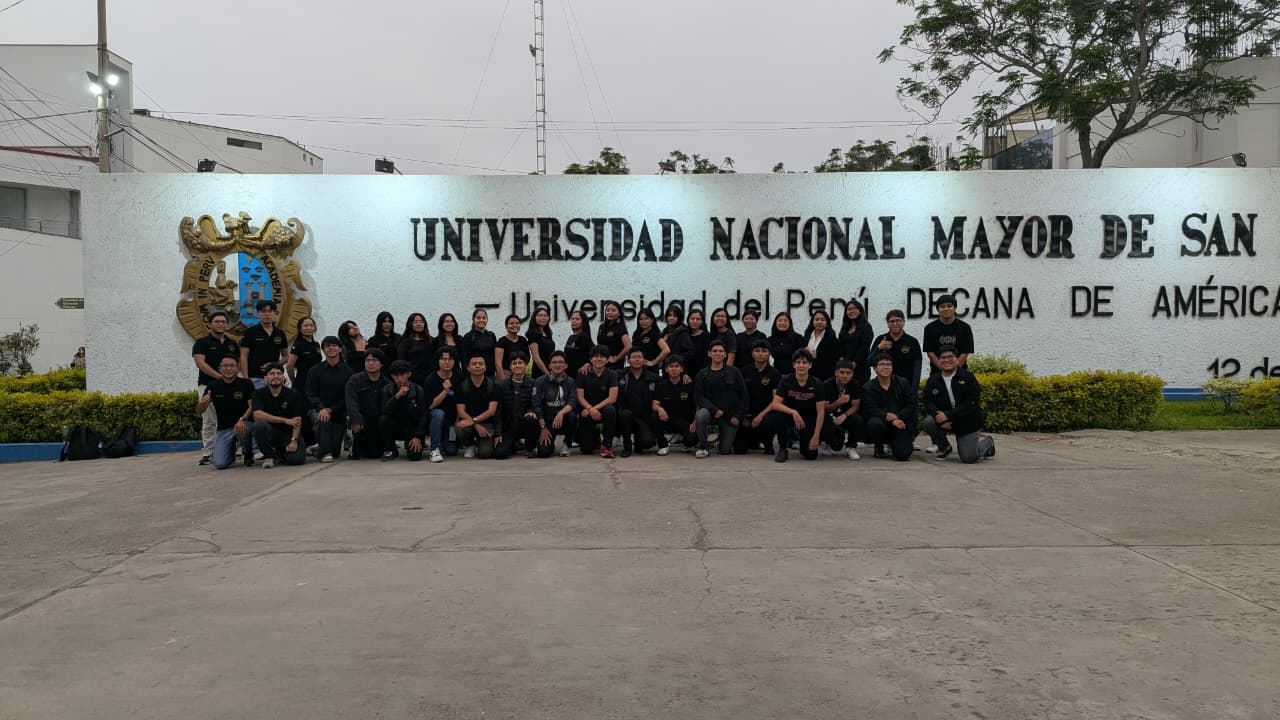
Intinauta was founded in May 2024 by Rivaldo Duran at the National University of San Marcos. The name combines Inti, the Quechua word for “Sun,” with Nautes, a Greek term associated with navigation. This identity reflects a vision that links Andean heritage, scientific vocation, and a forward-looking space mission.
More than an institutional label, Intinauta represents a research initiative built from Peru with an international outlook, aimed at opening new pathways for Latin American participation in space science and technology.
Institutional Mission and Vision
Intinauta works to strengthen emerging space research ecosystems through scientific projects, academic training, interdisciplinary coordination, and participation in international networks and scholarly spaces. Its vision combines rigorous research, leadership development, academic production, and the creation of opportunities for students and early-career professionals.
The institution promotes a culture of curiosity, discipline, collaboration, and continuous learning. Its focus goes beyond outreach: it seeks to generate scientific output, research experience, technical capacity, and academic presence in specialized environments.
How Intinauta Is Organized
Intinauta presents itself as an integrated structure that connects strategy, research, and people-centered management. This model is intended to support institutional coordination, organizational growth, and scientific development in a coherent way.
Its public organizational model includes three main leadership areas:
- Strategy and Operations, focused on institutional planning and operational coordination.
- Research and Development, focused on scientific development, innovation, and research coordination.
- Human Resources Management, focused on well-being, internal support, and people-related management.
This structure gives Intinauta the profile of a growing research center rather than that of an isolated student initiative.
Laboratories and Initiatives
Intinauta’s academic and technical work is organized around laboratories with differentiated scopes. The laboratories publicly presented in its institutional structure include:
- BioXLab — Space Life Sciences Laboratory.
- PachaLab — Aerospace Design Laboratory.
- PlanetLab — Space Physics Laboratory.
- RocketLab — Experimental Rocketry Laboratory.
This laboratory structure enables complementary work in space science, engineering, aerospace design, space physics, experimental systems, and applied research projects.
Academic and International Projection
Intinauta has projected its work into international academic spaces, including conferences and specialized meetings in multiple cities and institutional environments. Its public narrative highlights the presentation of Peruvian aerospace research at international congresses and the visibility of young researchers in high-level scholarly contexts.
In this sense, Intinauta is presented not only as a learning community, but also as a platform for producing, organizing, and projecting research from Latin America into international scientific forums.
Intinauta and LAJA
Latin American Journal of Astronautics (LAJA) is the scientific journal published by Intinauta Research Center. Through LAJA, Intinauta extends its institutional mission into academic publishing by offering a peer-reviewed, open-access, fee-free platform for the dissemination of rigorous research in astronautics, space systems, and applied technological development.
The journal forms part of Intinauta’s broader commitment to scientific community-building, knowledge circulation, and the strengthening of space capacity in Latin America and other emerging research environments.
Institutional Contact
Intinauta Research Center
Institutional website: https://www.intinauta.com
General contact: info@intinauta.com